
Managing files
Kentico allows you to upload files (such as GIF, JPG, SWF, PDF, XLS, DOC, etc.) to the Kentico database or file system and manage them as any other content.
File management approaches in Kentico
If you need to upload files to the Kentico database or file system, you need to distinguish between four types of files:
CMS.File pages
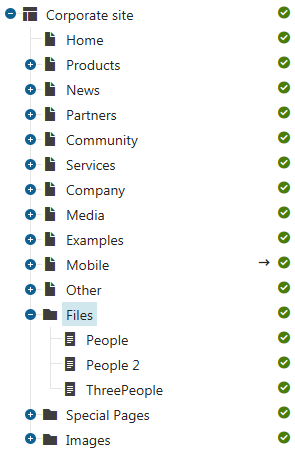
These files are uploaded by content editors as new CMS.File pages into the content tree. You will typically use this type for files that are used as part of unstructured pages, such as page links or images inserted into editable regions of pages. It is advisable to have files stored within folders (CMS.Folder page type). You can also use the File import module when uploading multiple files. The Document library module allows convenient management of CMS.File pages on the live site.
Page attachments
These files are stored as a part of a structured page and their life cycle is also bound to the page (including workflow and versioning). You can have an unlimited number of files attached to a page. You can find a detailed description of the whole concept and examples of typical usage in Attaching files to pages.
Media libraries
The Media libraries application allows you to store large amounts of files, while large file sizes are supported. The application and its typical usage is described in Media libraries.
Unmanaged files
These files are part of the website theme. They should be stored in the <web project>\app_themes\<theme>\images folder on the disk. They usually include images and Flash animations used throughout the site. These files are not managed by the system.