
Page templates
The Kentico portal engine provides a highly flexible and extensible framework that allows you to build complex dynamic websites using built-in or custom web parts.
What is a page template?
Every web page is based on a page template. The page template can be specific for a single page (so called “ad hoc” page template) or re-used for any number of pages. The following picture shows examples of pages that use the same page template.
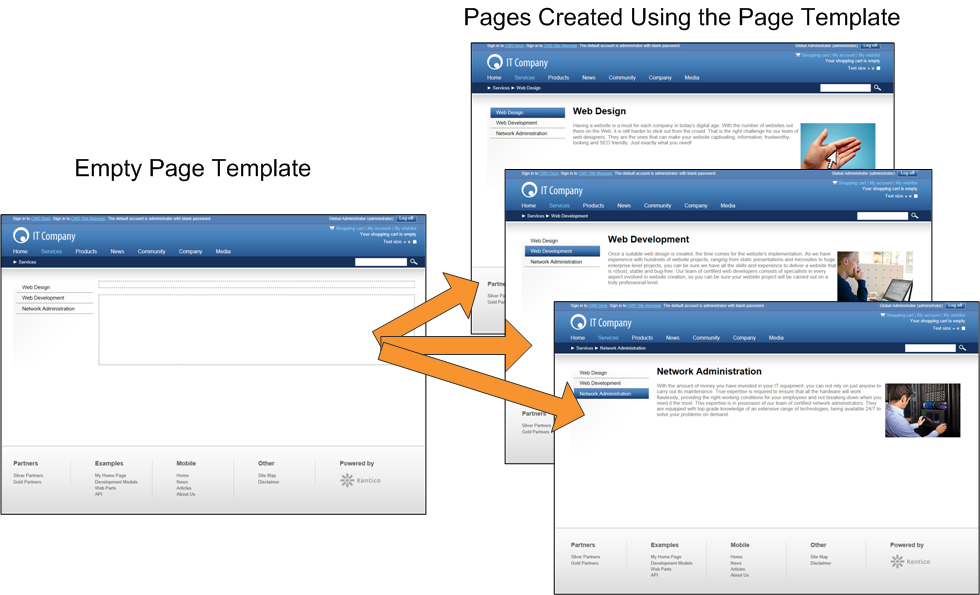
The pages have different content, but use the same header, menu content structure, and footer — they are based on the same page template. Templates allow you to quickly create multiple pages with the same design.
What does a page template consist of?
Portal engine page templates are a combination of a page layout (ASCX or HTML code) and web parts. The following figure illustrates the structure of page templates and how they are used to display pages.
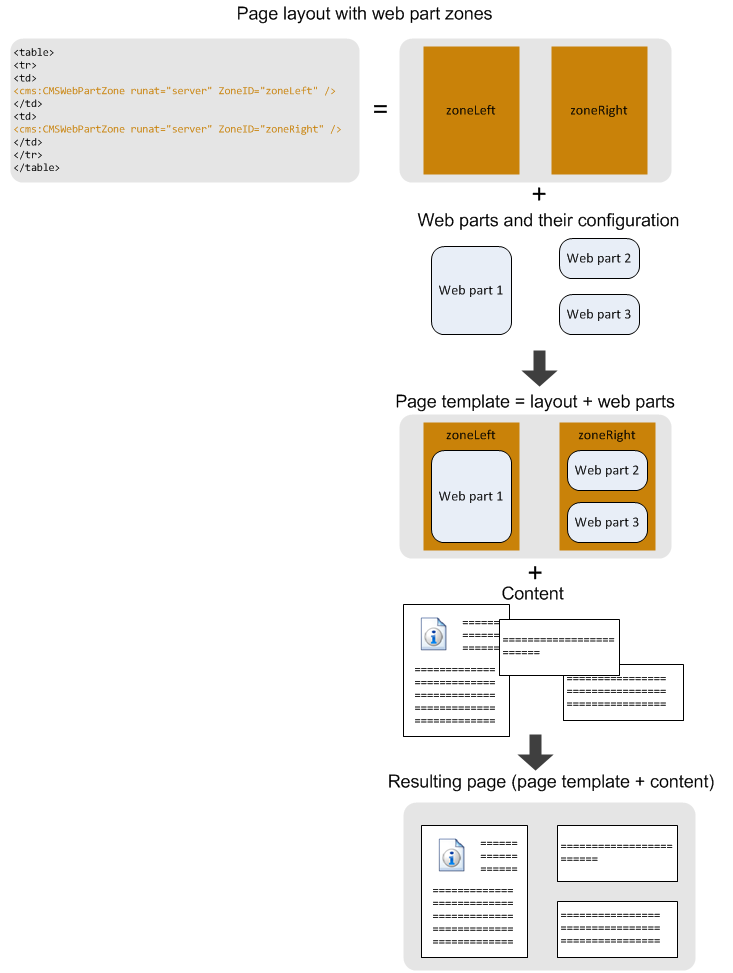
The page layout is a piece of fully customizable HTML code that defines the design of the page and contains web part zones. The web part zones represent areas where designers can place web parts. The web parts display page content or provide functionality, such as input forms. The layout and the web parts together define the page template.
When you add page specific content to the page template, you get the final page.